DROPS TRAINING
DROPS Training
Find the right path for dropped object prevention training: live workshops, the Focal Point Program, Snakes & Ladders awareness, Metaverse practice, and on-demand learning.
DROPS TRAINING
Find the right path for dropped object prevention training: live workshops, the Focal Point Program, Snakes & Ladders awareness, Metaverse practice, and on-demand learning.

DROPS Training
Find the right path for dropped object prevention training: live workshops, the Focal Point Program, Snakes & Ladders awareness, Metaverse scenarios, recordings, and your enrolled learning.
Start with Snakes & Ladders for basic DROPS awareness, then join a live workshop or continue a formal learning pathway from one place.
Start here
Play Snakes & Ladders to learn foundation concepts and unlock the certificate exam.
Start with Snakes & LaddersPathway
A member pathway that connects workshops, mentoring, and practical DROPS implementation.
View the pathwayLive training
Register for upcoming instructor-led sessions across DROPS Recommended Practices and core topics.
See upcoming datesImmersive
Use immersive VR, desktop, and browser scenarios for facilitated hazard-recognition training.
Explore scenariosOn demand
Watch forum and webinar recordings as on-demand learning material for teams.
Browse recordingsYour progress
Log in to access enrolled workshops, exams, certificates, and progress tracking.
Continue learningStructured pathway
The Focal Point Program connects the core workshops into a practical member pathway for people responsible for driving DROPS implementation inside their organization.
Play the DROPS Snakes & Ladders learning game and complete the certificate exam.
Review the core DROPS recommended practice materials, supporting publications, audio book, topic-specific guidance, AI chatbot activity, and final knowledge check.
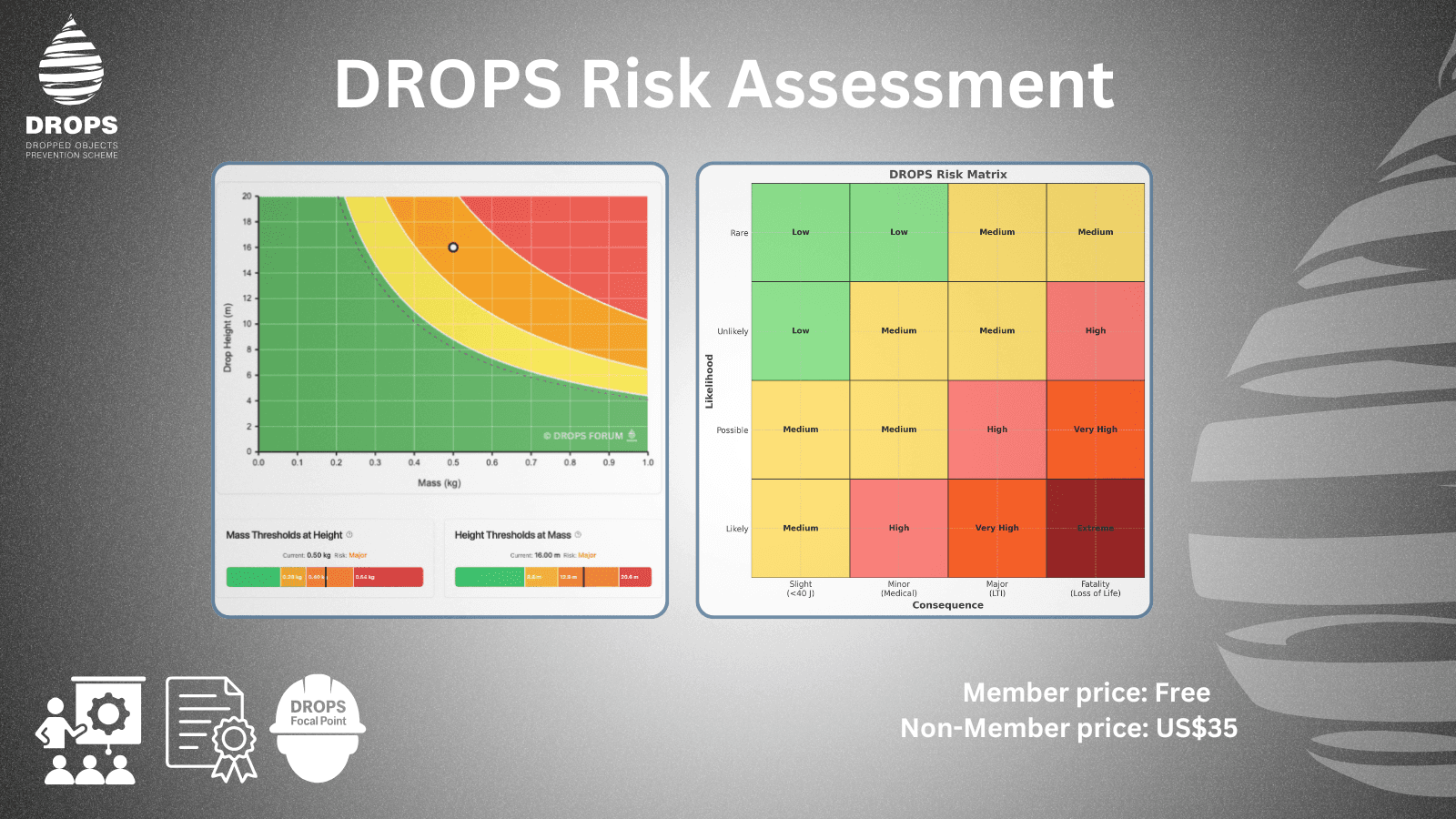
Work through DROPS risk assessment guidance, calculator demonstrations and practice, presentation materials, and the final exam.
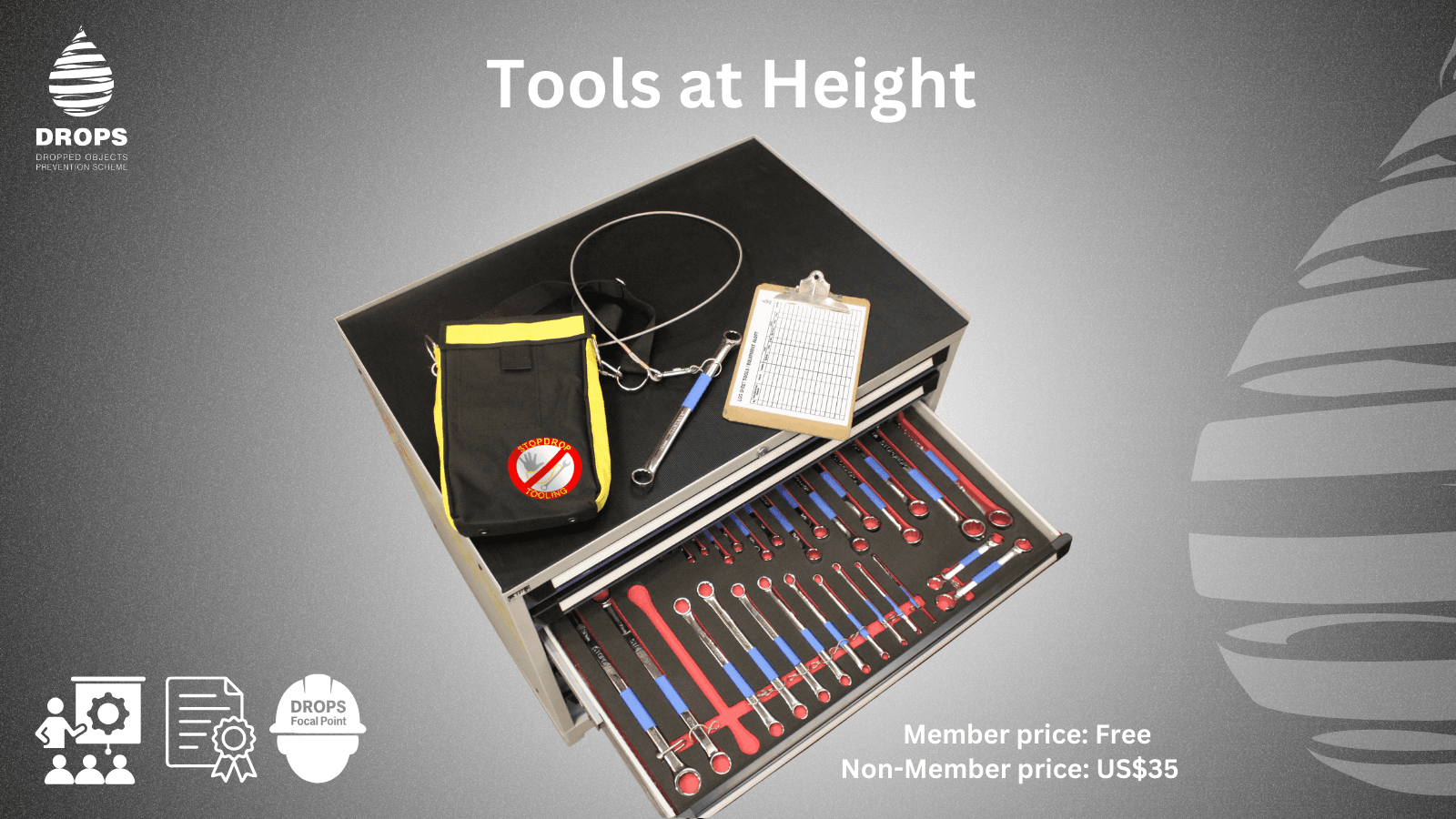
Review practical controls for preventing dropped objects when using tools at height, then complete the supporting recommended practice, knowledge check, and reflection.
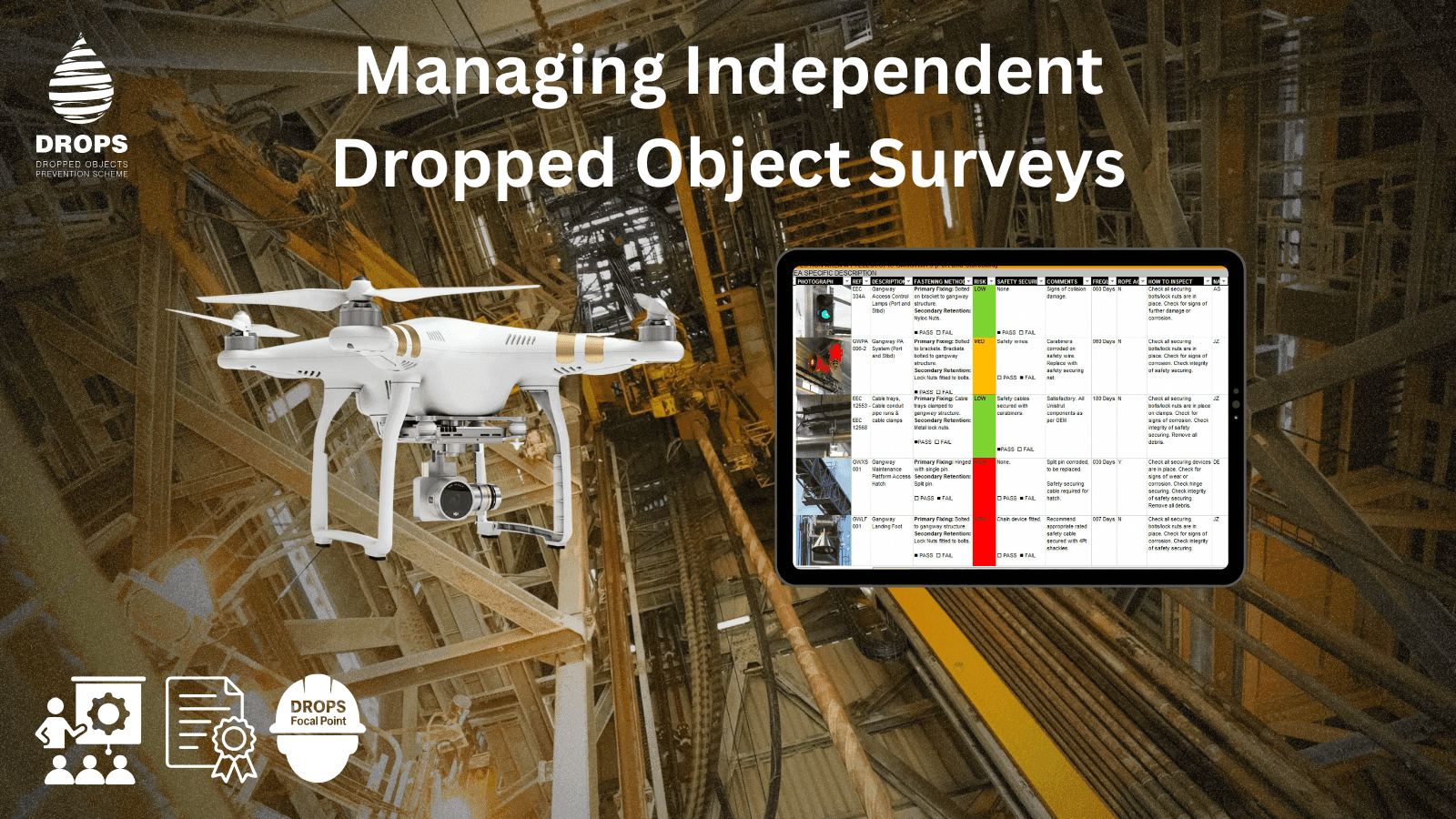
Review guidance for planning and managing independent dropped object surveys, including recommended practices, slide handouts, optional digital survey videos, and the exam.
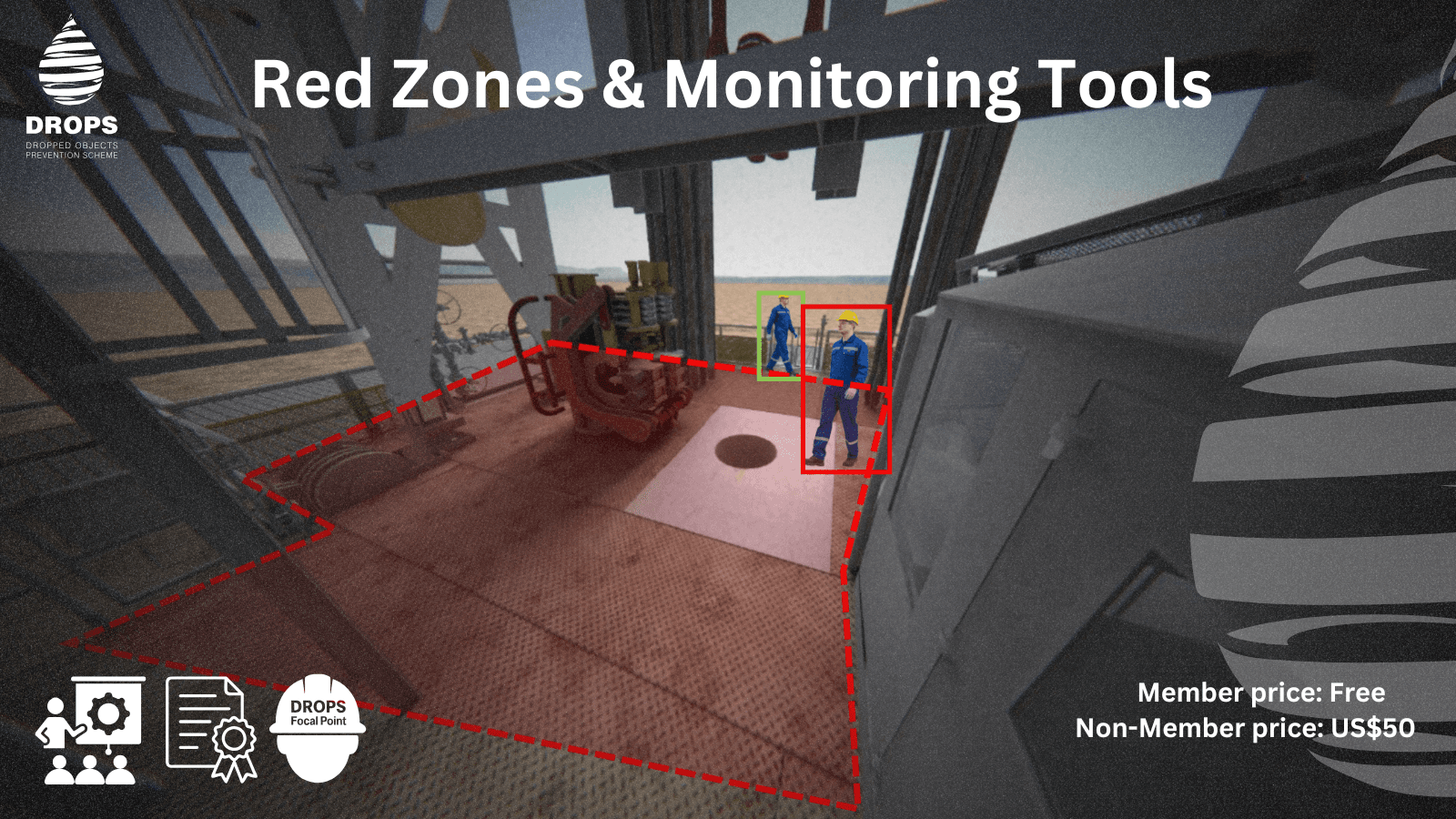
Review the workshop materials on red zone management and AI-supported monitoring, then complete the recap and quiz.
Review the workshop materials on reliable securing of equipment at height, then complete the recap and quiz.
Register for upcoming DROPS training sessions. Members receive discounted or included access where applicable.
Play Snakes & Ladders to practise core DROPS concepts and unlock the certificate exam after completing a game.
Start the gameExplore DROPS Metaverse scenarios for facilitated VR, desktop, and browser-based hazard-recognition sessions.
Explore the MetaverseUse DROPS Wells Forums, webinar recordings, and shared learning sessions to reinforce workshop topics on demand.
Browse recordingsJoin leading organizations committed to dropped object prevention




DROPS Training is crucial for a variety of reasons. It’s an important part of ensuring safety in industries where the risk of dropped objects is high, such as construction, manufacturing, oil and gas, and others. Here’s why DROPS training is so important:
In summary, DROPS training is a crucial investment for any company that wants to ensure the safety of its employees, maintain compliance with regulations, enhance operational efficiency, and avoid the potentially high costs associated with workplace accidents.
DROPS Recommended Practice specifies three primary three primary types of training for different roles:
Each type of training caters to the unique roles and responsibilities of the personnel, thereby ensuring a comprehensive approach to mitigating dropped object risks in the workplace.
DROPS training can be delivered through various methods, depending on the specific needs and circumstances of the organization. Here are the common methods of safety training adapted for DROPS:
1. Instructor-Led Training (ILT): Experts in DROPS training may provide in-person lessons and demonstrations, discussing scenarios related to dropped objects, demonstrating correct equipment handling and securing methods, and answering questions.
2. Online/E-Learning: Digital platforms could host interactive DROPS training modules, allowing employees to learn about the hazards and prevention strategies associated with dropped objects at their own pace. This may include video demonstrations, interactive quizzes, and 3D simulations.
3. On-the-Job Training: In a setting where DROPS is relevant, experienced workers or safety officers could provide real-time, practical training. This might involve demonstrating how to inspect and secure equipment, identify potential risks, and implement necessary preventative measures.
4. Safety Drills and Simulations: Simulated environments or scenarios can be used to illustrate potential dropped object incidents, allowing employees to practice their response, such as securing loose items, clearing the drop zone, and reporting the incident.
5. Toolbox Talks: Short, focused discussions can be held at the start of a shift or before a specific task, covering relevant DROPS issues such as the correct use of lanyards, tool tethering techniques, or the importance of regular equipment inspections.
6. Webinars and Video Demonstrations: Video materials or live webinars can effectively demonstrate correct procedures for preventing dropped objects, such as the correct way to secure tools at height, how to inspect equipment for wear and tear, and what to do in the event of a dropped object incident.
7. Certification Programs: Depending on the industry and the specific role of the employee, there may be formal DROPS certification programs. These programs would provide comprehensive training on all aspects of dropped object prevention and could involve both theoretical and practical assessments.
As with all safety training, the most effective DROPS training programs will likely involve a mix of these methods, tailored to the specific needs and circumstances of the organization and its employees. Regular refresher courses are also crucial to ensure that employees’ knowledge and skills are up to date.
Safety in the workplace, particularly in high-risk industries such as oil and gas, is paramount. Dropped Object Prevention Scheme (DROPS) training plays a crucial role in fostering a culture of safety by providing personnel with the necessary knowledge, skills, and attitudes to identify and mitigate the risks associated with dropped objects. But how can we ensure that this training truly leads to changes in behavior and practice? By incorporating proven learning models into the design and delivery of DROPS training, we can enhance its effectiveness and, ultimately, improve safety outcomes.
Bloom’s Taxonomy, a widely recognized learning model, categorizes learning into three domains: cognitive (knowledge), affective (attitude), and psychomotor (skills). In the context of DROPS training, we can use this model to ensure that we’re addressing all aspects of learning.
The cognitive domain can be targeted by teaching personnel about the risks of dropped objects, the potential consequences of dropped object incidents, and the procedures and practices for preventing such incidents. The psychomotor domain can be addressed through hands-on training in tasks such as equipment inspection and the correct use of safety securing devices.
However, to truly foster a culture of safety, we must also target the affective domain, which relates to attitudes, values, and emotional responses. This is where Krathwohl’s Affective Domain model comes in. By incorporating activities that prompt personnel to reflect on their attitudes towards safety and risk-taking, and by providing positive examples of safe behavior, we can encourage personnel to value safety and take ownership of their role in preventing dropped object incidents.
The Competency-Based Learning (CBL) Framework is another powerful tool for enhancing DROPS training. In a competency-based approach, learning is focused on the mastery of specific skills or competencies. In the case of DROPS training, these competencies might include the ability to identify potential dropped object hazards, to carry out equipment inspections, or to respond effectively to a dropped object incident.
By defining these competencies clearly and providing personnel with opportunities to practice and demonstrate them, we can ensure that they are not just acquiring knowledge, but also developing the skills and attitudes they need to apply that knowledge in their day-to-day work.
While classroom-based and online training can provide a solid foundation of knowledge, on-the-job training and simulations are particularly effective in fostering behavior change. They offer an immersive, realistic experience, allowing personnel to apply their learning in a context that closely resembles their actual work environment.
Simulations can also evoke emotional responses, making the potential consequences of unsafe behavior more tangible and emotionally resonant. This can motivate learners to adopt safer practices and can help to reinforce the importance of safety in a way that is far more powerful than theoretical learning alone.
By incorporating these learning models into the design and delivery of DROPS training, we can provide a more comprehensive and effective learning experience. The cognitive, affective, and psychomotor domains of Bloom’s Taxonomy ensure a holistic approach to learning, while the Competency-Based Learning Framework emphasizes the application of knowledge in real-world contexts. On-the-job training and simulations, meanwhile, offer a powerful means of fostering behavior change and improving safety outcomes.
In the end, the goal of DROPS training is not just to provide information, but to foster a culture of safety. By leveraging these learning models, we can create training programs that truly make a difference.
The DROPS Training and Awareness Course employs a “Train the Trainer” concept, which is a strategic method for disseminating knowledge and skills throughout an organization. This concept is particularly effective for cascading knowledge, as it empowers a select group of trained individuals to further train others within their own organization.
In this case, DROPS provides the training to Health, Safety, and Environment (HSE) trainers who become well-versed in all aspects of dropped object prevention. These HSE trainers, equipped with a thorough understanding of DROPS methodologies, terms, best practices, and risk assessment tools, then adapt and customize the DROPS training to suit their specific organizational needs.
The training package provided to these HSE trainers is designed to be flexible and editable. It includes an extensive collection of support materials such as documentation, presentations, photos, graphics, and other media files. These resources allow the trainers to modify and tailor the course to address the unique dropped object risks associated with their specific assets, locations, or operations. The result is a customized, in-house training program that accurately reflects the organization’s specific needs and circumstances.
This cascading model of knowledge transfer ensures that the principles and practices of dropped object prevention are disseminated widely and effectively throughout an organization. It also allows for the integration of DROPS methodologies with the organization’s existing safety culture and practices, thereby enhancing the overall effectiveness of the training.
Training and inspection companies can use the DROPS Train-the-Trainer materials in combination with insights from their own inspections to deliver comprehensive and practical DROPS training in a variety of formats. Here’s how they might do this:
In all of these formats, the combination of DROPS materials and real-world inspection knowledge provides a robust and comprehensive training experience. The DROPS materials provide the foundational knowledge, while the inspection insights offer practical, context-specific examples of the risks and preventive measures. This combination helps to ensure that the training is not only informative, but also relevant and applicable to the learners’ daily work.
Members receive discounted registration fees for all DROPS training events. Join our community of safety professionals.